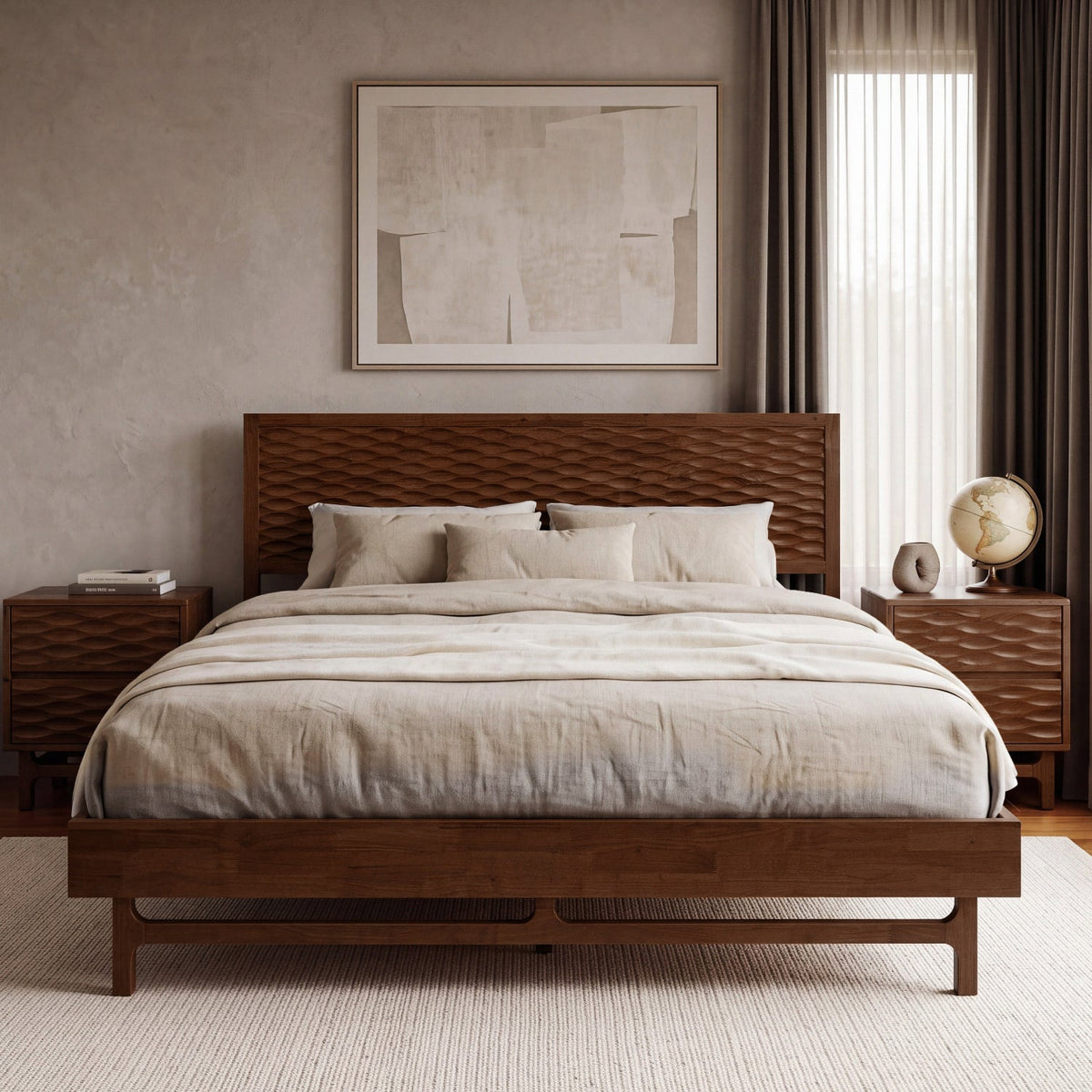
Behind the natural beauty of wooden furniture lies a series of thoughtful decisions about materials, construction, and finishing.
A beautiful bed frame begins long before it becomes part of a bedroom.
Understanding how solid wood furniture is made can help you appreciate the details that influence its appearance, stability, and everyday performance.
1. Selecting the Wood
The process begins with choosing suitable timber.

Different wood species offer different grain patterns, colors, and working characteristics. The selection of lumber helps determine how the finished piece will look and how its components can be shaped and joined.
Natural variations are expected. They are part of what makes solid wood different from a printed or replicated wood pattern.
2. Preparing the Material
Wood responds to changes in temperature and humidity.
One common preparation method is kiln-drying, which uses controlled conditions to reduce moisture in the timber before furniture production.

Proper moisture management helps reduce the risk of excessive movement, although natural wood can still expand and contract with changes in its environment.
3. Shaping and Joining
Once prepared, wooden components are cut, shaped, and fitted together.

Some designs use traditional woodworking connections, while others incorporate reinforced hardware and support structures.
For a bed frame, the strength of the connections, side rails, slats, and center supports matters just as much as the appearance of the headboard.

4. Sanding and Finishing
Sanding prepares the surfaces for a smooth touch and a consistent finish.

The final finish helps establish the furniture's color and appearance while offering a degree of surface protection.

Because wood is a natural material, variations in tone and grain remain visible even after finishing.
5. Preparing Furniture for Delivery
Before furniture reaches your bedroom, its individual components must be protected for transportation.
Well-designed packaging uses protective materials and secure placement to help reduce movement and impact during shipping.
Many modern bed frames arrive ready for home assembly, with the necessary hardware and instructions included.

Thoughtful Details, Everyday Living
Grainkin Living selects solid wood furniture produced through established manufacturing partners, with attention to materials, practical construction, and design.
We believe understanding the details behind furniture helps you choose pieces with greater confidence.